Challenge
Create a standardized and effective project set-up for economists and administrative staff, to strengthen the system's role as a reliable data source.
Collaborators
Client's product manager
My responsibilities
Product Designer; End-to-End UX & UI Design Process
About Admiral

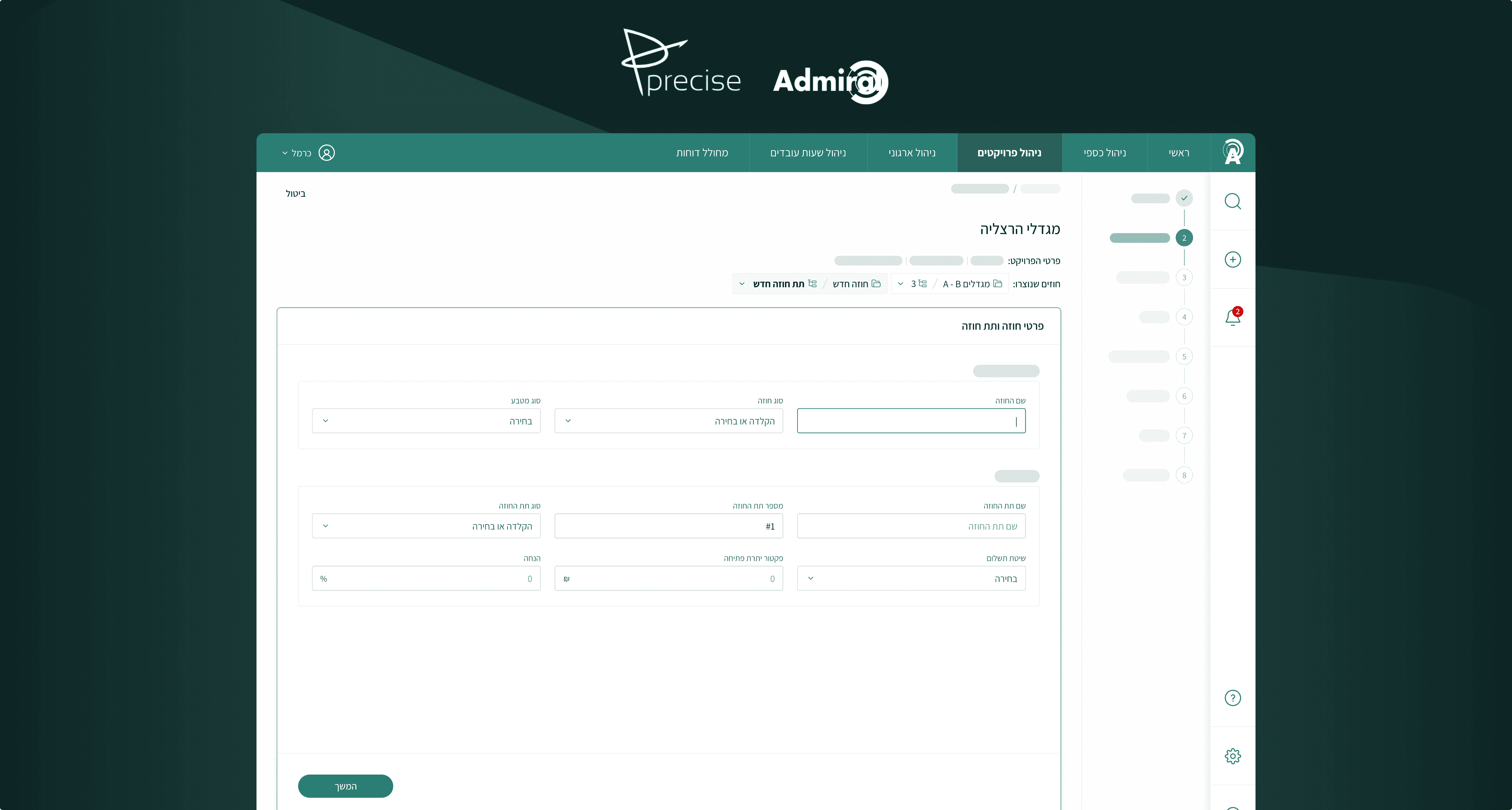
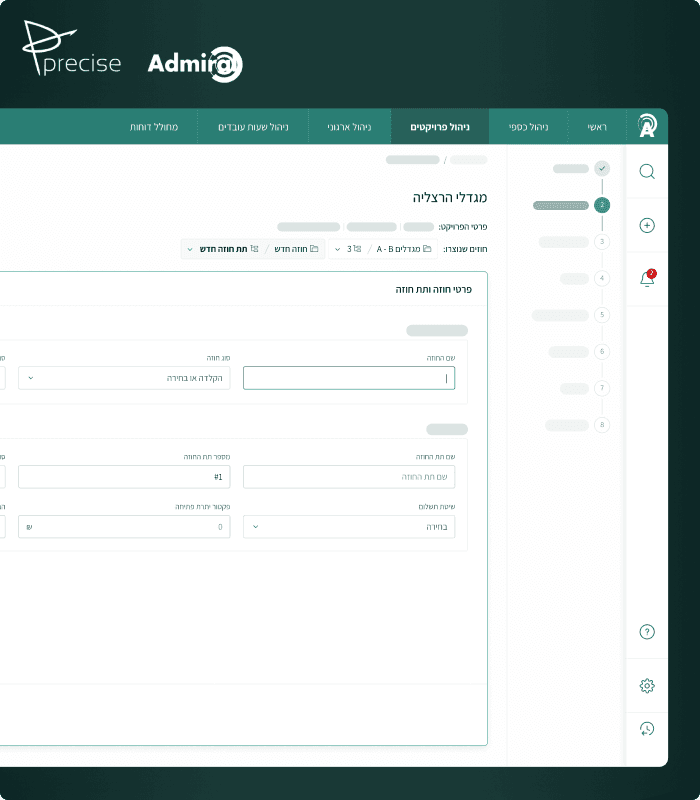
Admiral is an advanced financial management system, used by 750+ active users in Israel, specialized in architects' and engineers' domains. The system supports long-term project-based work and drive optimal profitability.
This case study focuses on the redesign of the project creation flow, which is a key operational entry point that affects data quality, process consistency, and the system’s ability to support accurate financial oversight over time.
By working closely with the client's product manager, I was able to validate concepts based on indirect user feedback and gain insight into the development constraints.
My role
Simplified a high-friction workflow into a guided experience that reduces errors, builds confidence, and improves data quality.
Standardize workflow across different roles and experience levels
Step-by-step guidance and contextual decision points
Increased efficiency with templates, defaults, and reusable patterns
Business goals
Increase trust.
Improve operational efficiency.
Support product adoption and scalability.
Personas
Team leads
Consistency in project documentation, which makes follow-up, control, and profitability tracking more reliable.
Economics and administrative staff
Clear and reliable project setup for financially structured planning, tracking, and reporting.
😊
The challenge
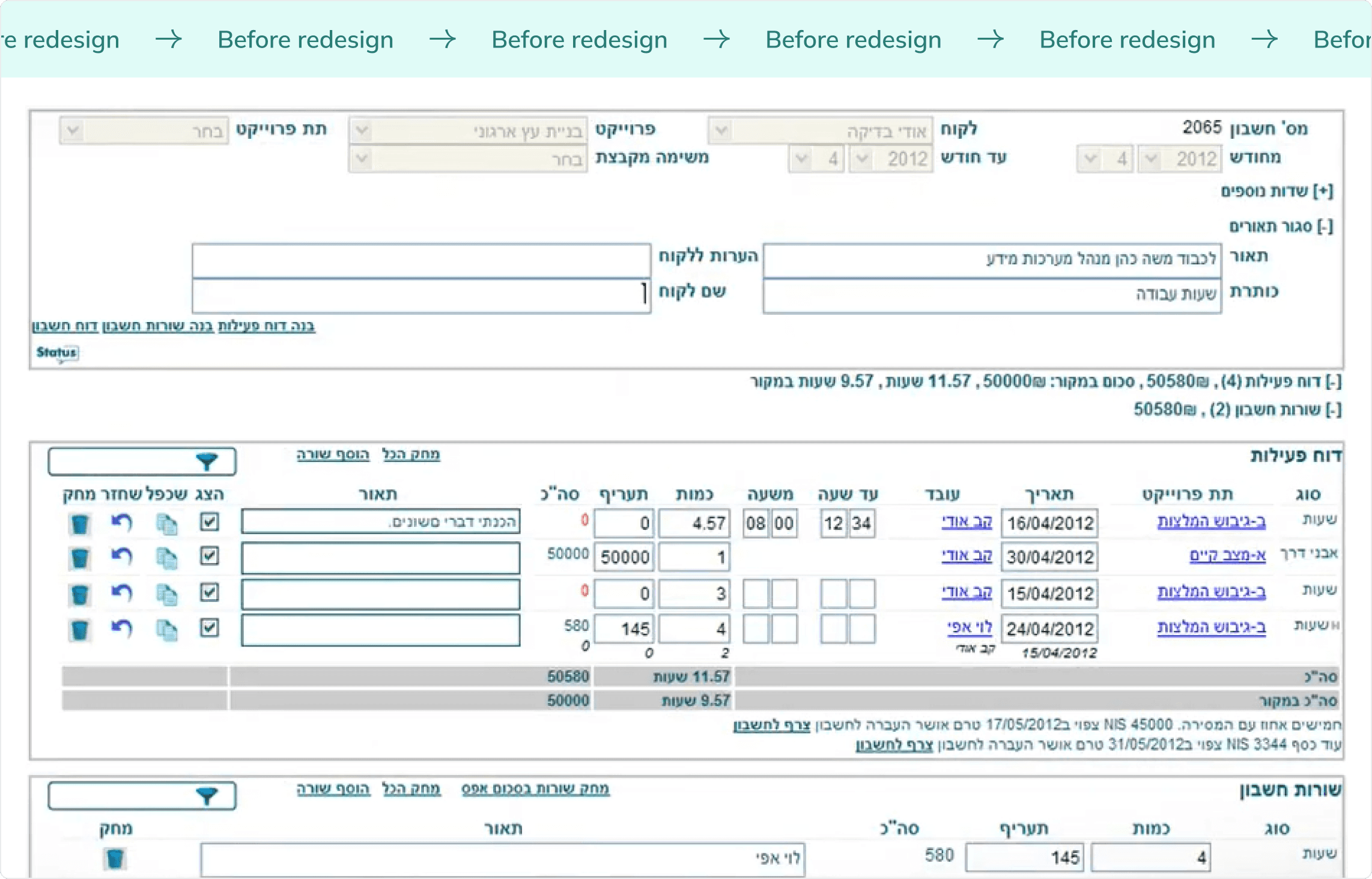
It requires users to be highly mentally and cognitively prepared.
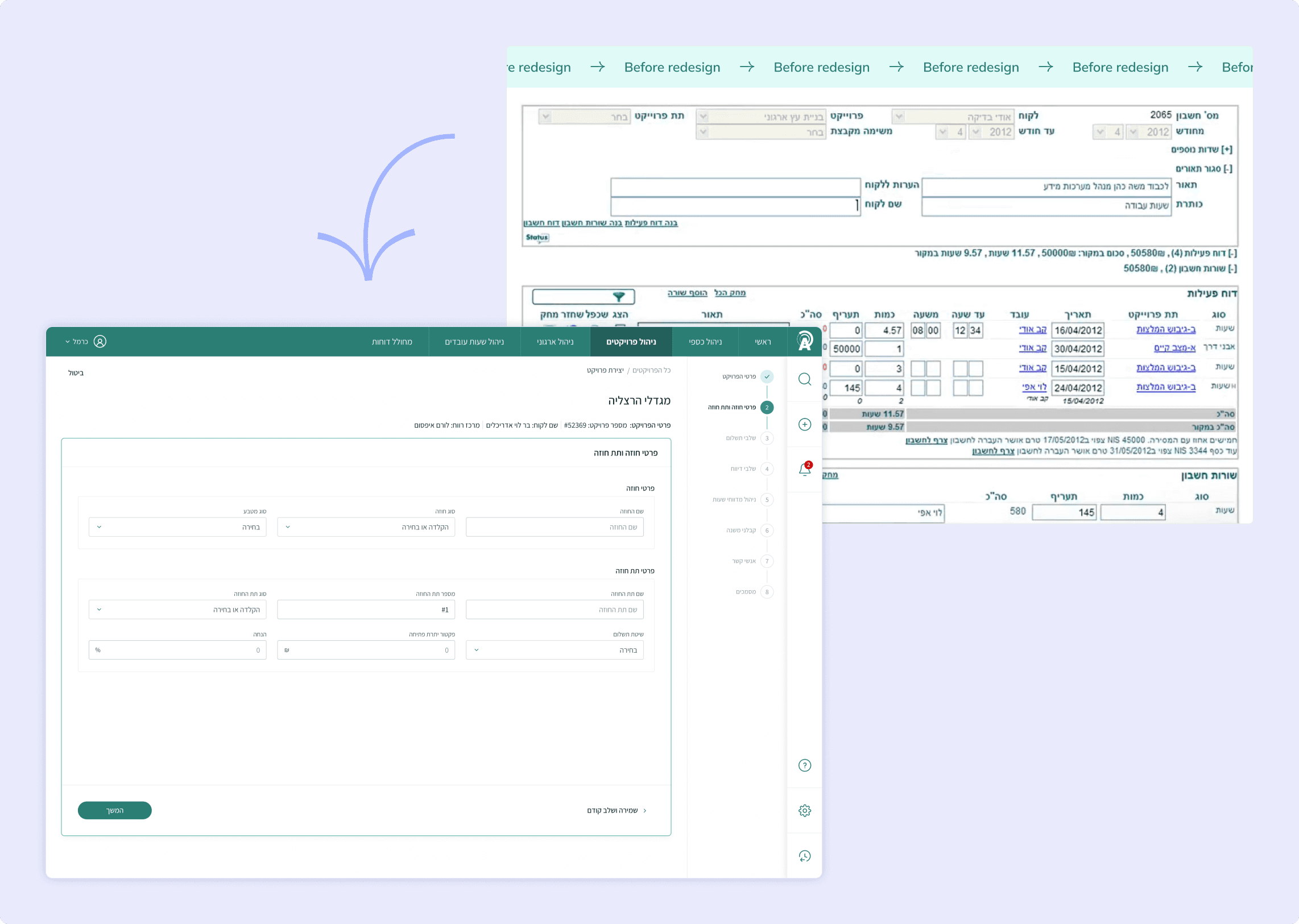
My time working on Admiral gave me a deeper understanding of its terminology, concepts, and internal logic. But when I sat down with the product manager to walk through the existing flow, I felt completely lost.
No clear actions and guidelines
Unclear hierarchy between project entities
Actions leading to the same destination
Research
We need to support people with different work habits and digital orientation levels.
I wanted to better understand employees' day-to-day experience: their working habits, what information is critical, what is often missing, which mistakes tend to repeat themselves, and at what stage administrative employees typically enter the process.
Since the product manager keeps in close contact with users, she passed on all my questions and returned with answers.
"Often milestone tasks are inaccurate and subcontractors are forgotten"
"Templates with different names but with same information"
"Administrative staff avoid entering this area of the system"
Workflow challenges were well-defined:
Key insights
The lack of a clear model for how projects should be created causes people to adopt their own habits instead of following organizational practices.
Cognitive overload can make people forget or miss critical information.
It is easier to create new personal solutions than to use organizational data.
Avoidance behavior signals deeper lack of trust and psychological safety around the workflow.
Benchmark
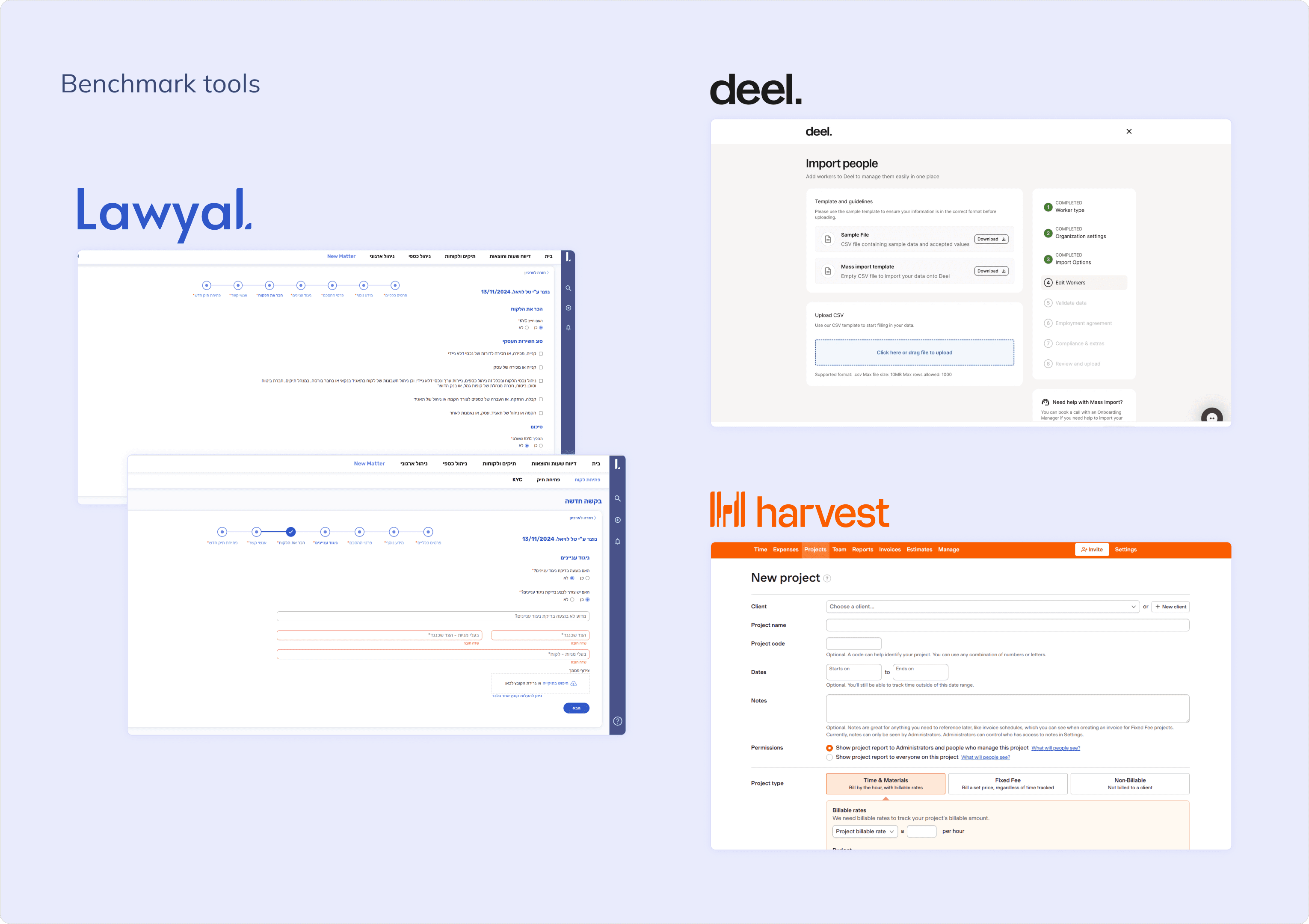
Exploring platforms that offer guided or flexible open-ended tasks.
Tools and processes
I analyzed both flexible and structured creation processes.
My goal was to understand how other systems guide users through structured steps, but also how flexibility can be preserved.
Ideation
Keeping too much flexibility preserved familiarity, but did not solve the deeper problem of inconsistency.
Design approach
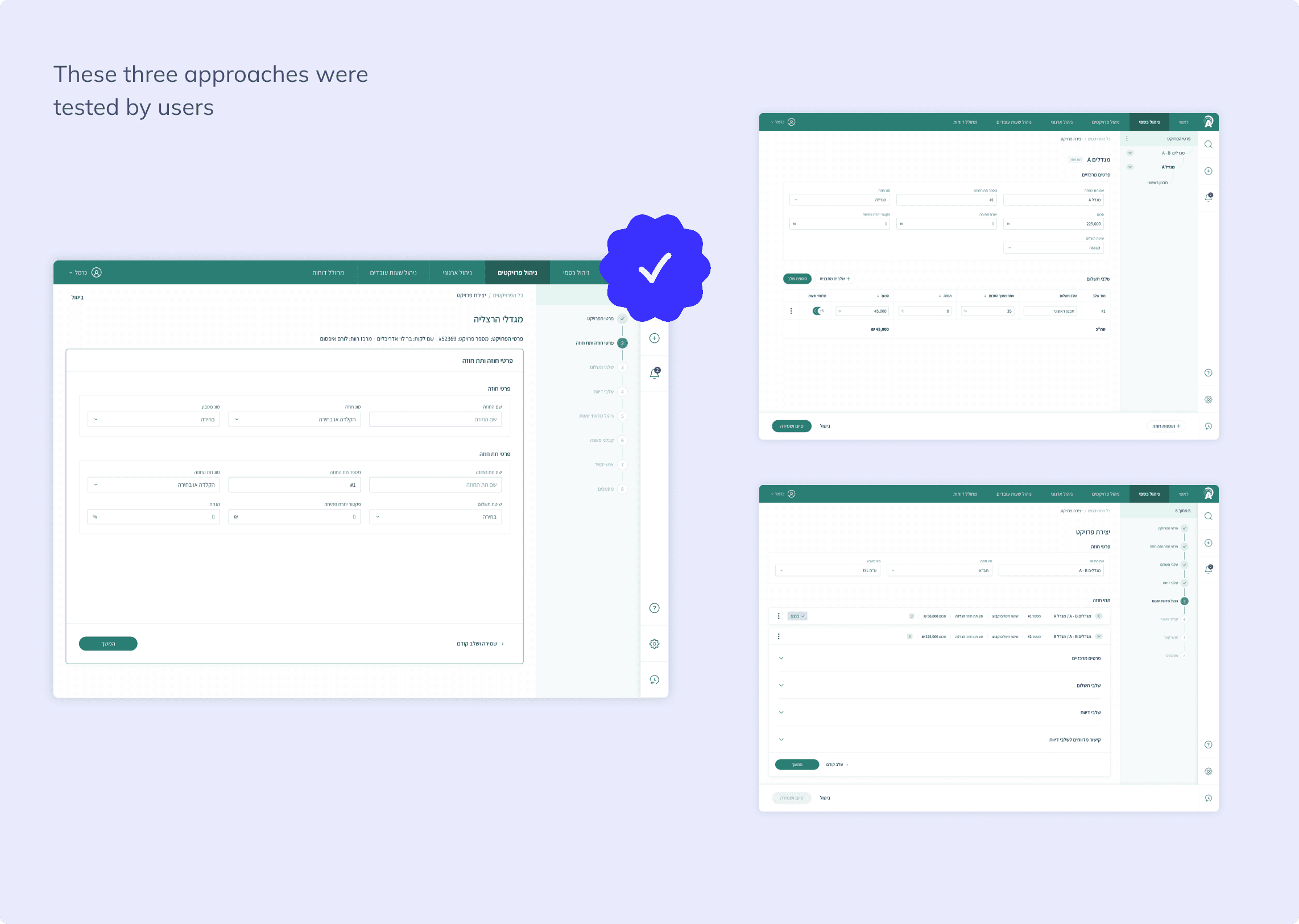
It was necessary to restructure information to establish a clear hierarchy of project entities. Each direction I explored reflected a different balance between flexibility and structure:
1. High flexibility with a clear hierarchy
2. Guided process with flexible overview
3. Fully guided process, step-by-step workflow - the selected one.
Decrease cognitive load
Breaking down the work into small tasks made it feel manageable.
Role-specific stages
Administrators initiate projects, while economists handle financial setup.
Reduce repetitive effort
Actions in bulk, defaults, templates, and reuse of existing structures.
The solution
Improved efficiency and confidence for varying roles and digital orientations in a high-friction and key operational workflow.
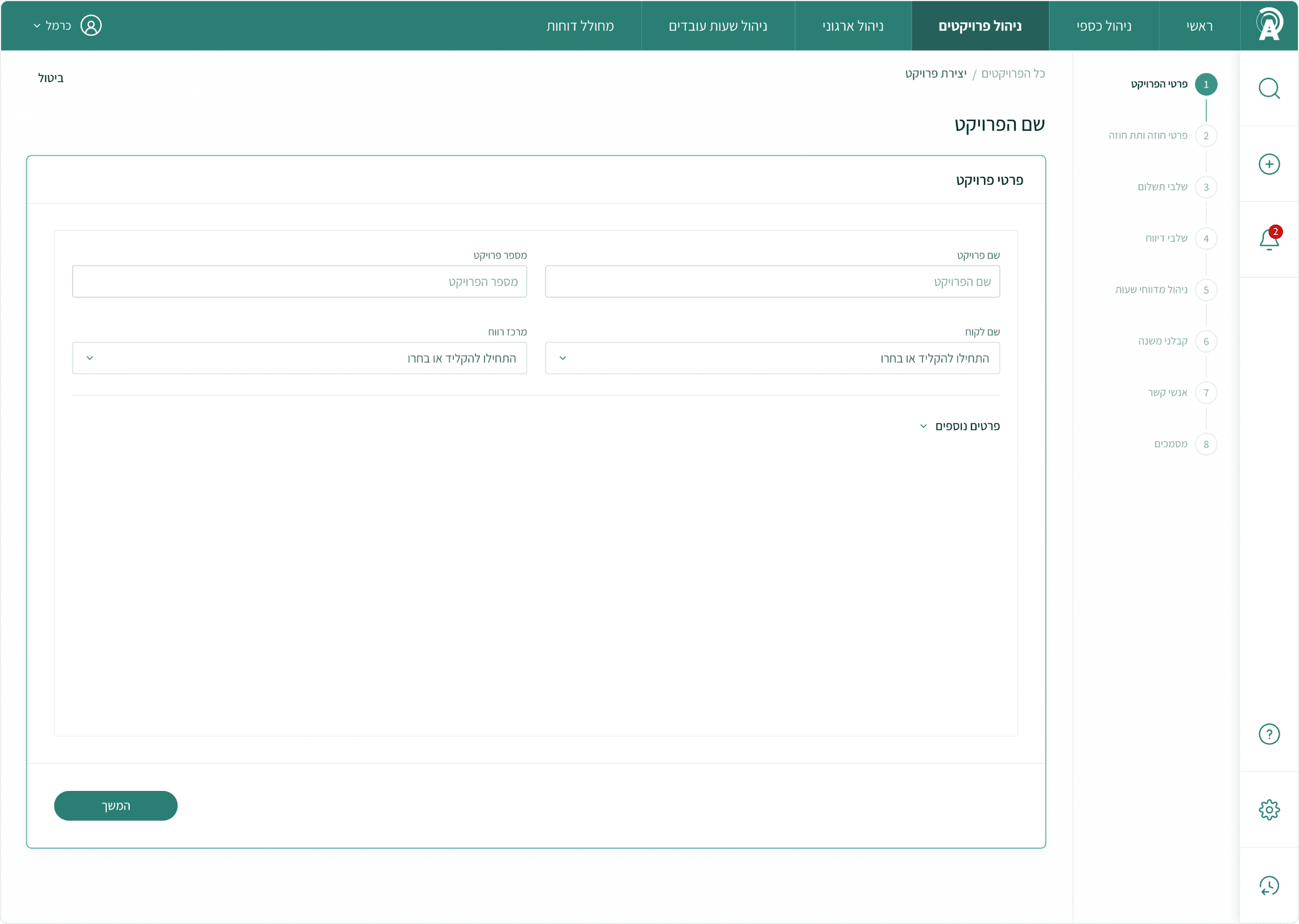
Begin with the essentials
The set-up begins with the minimum required information, creating a clear starting point and reducing early cognitive load.
This supports administration staff, and helps teams begin the process consistently. Optional information remains available, but only when needed.
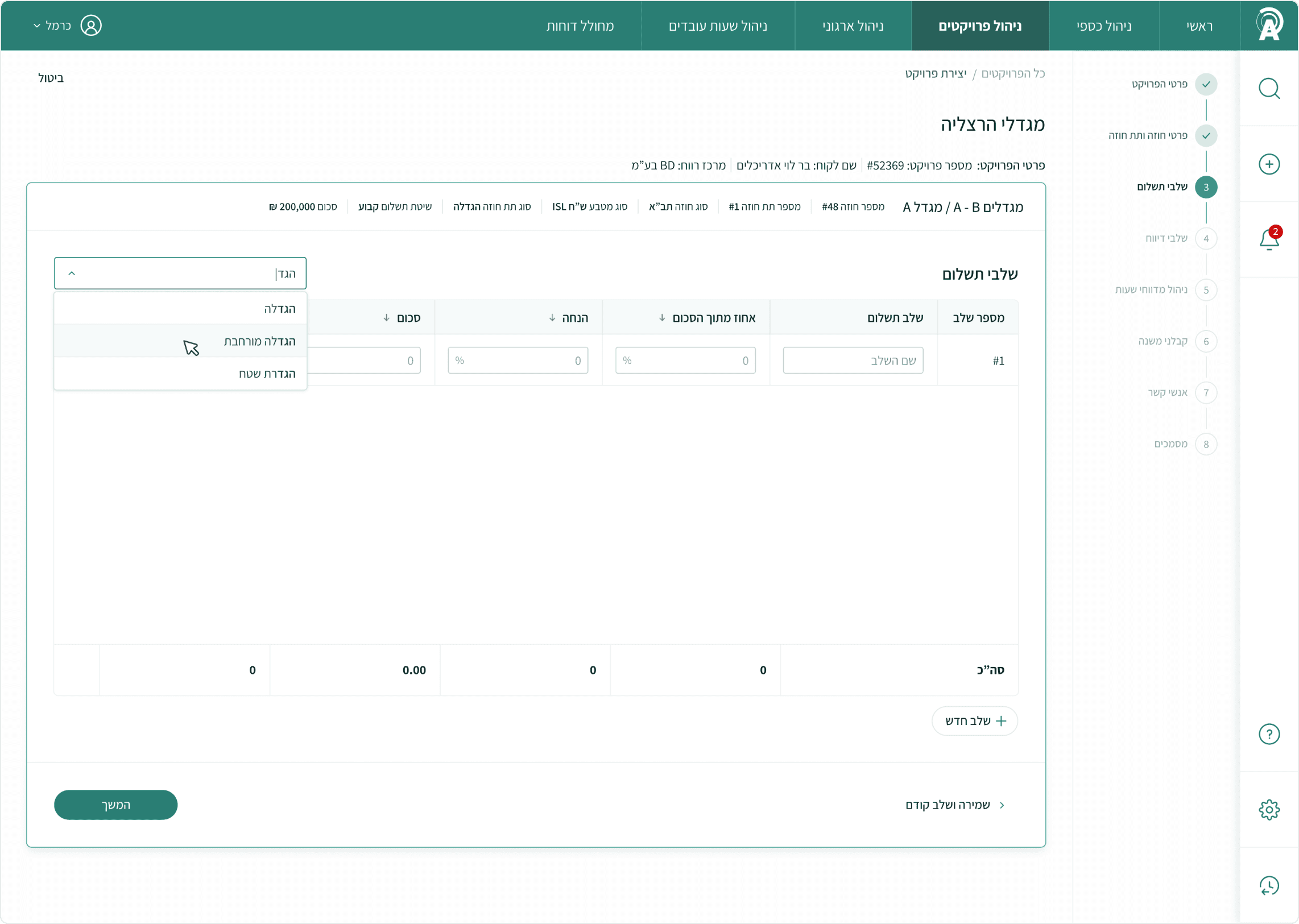
Keeping key context visible while users define the financial structure
Key project information stays visible while users define payment milestones, helping them work with greater accuracy and less reliance on memory.
Templates support recurring structures while preserving flexibility where adjustment is needed.
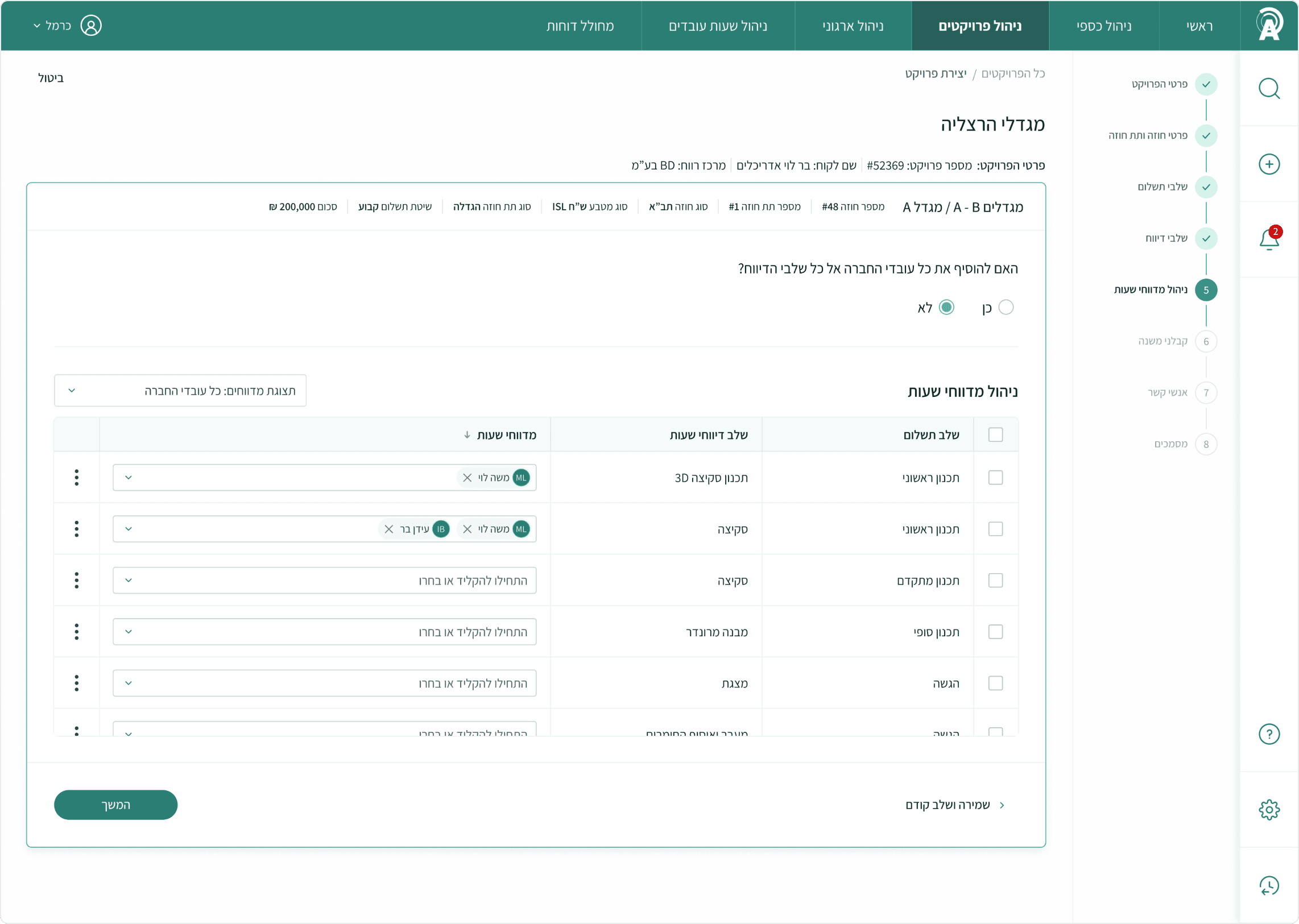
Adapt the flow to the most common reporting structure
The flow begins with a simple question that matches the most common organizational setup.
This reduces repetitive work in common cases, while still supporting more complex team structures using batch actions for efficacy.
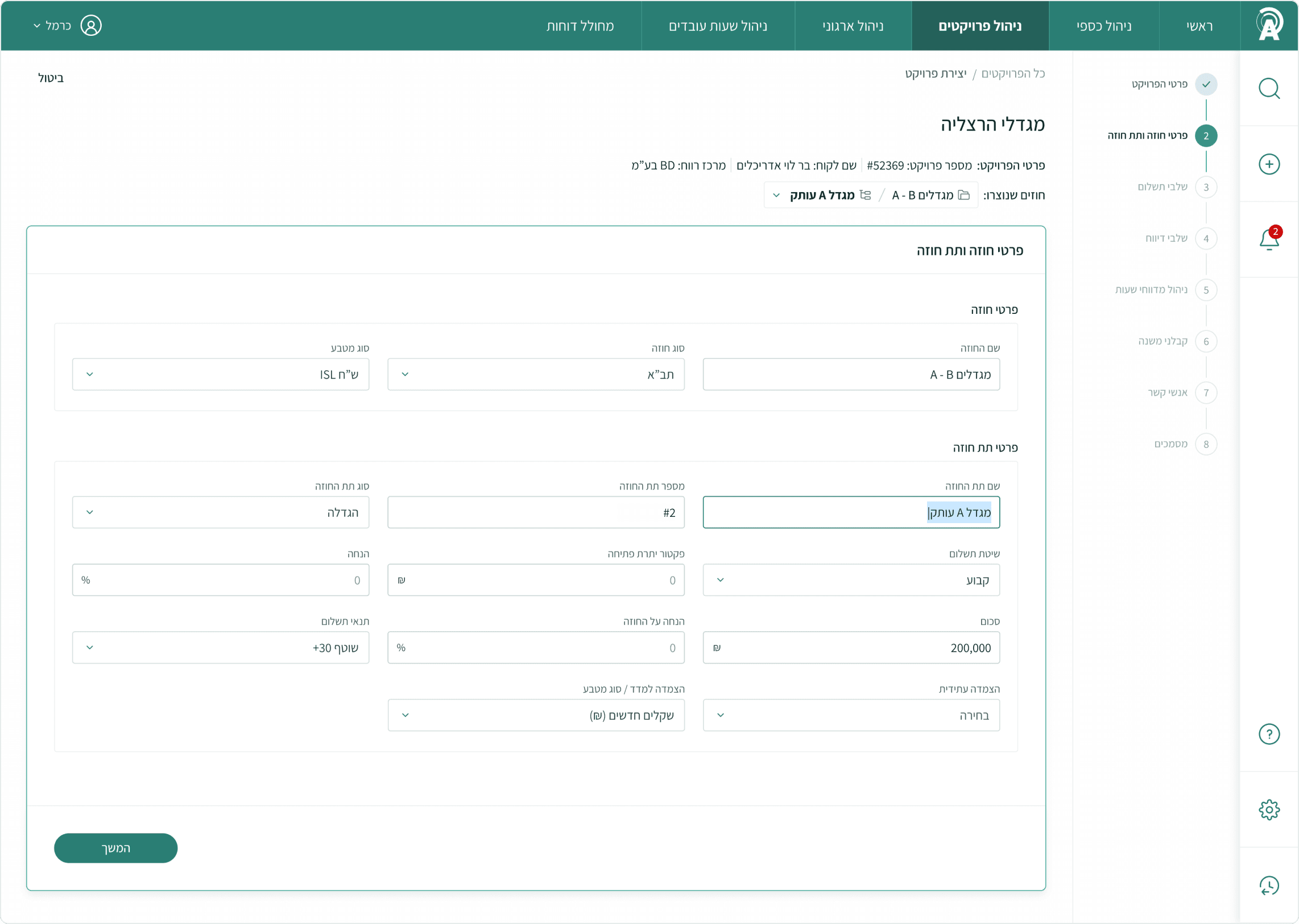
Sub-contract duplication: Resume from the point that needs attention
The duplication flow skips steps where information stays the same, and returns users directly to the point where edits are needed.
The copied name is highlighted for immediate correction, and a minimal, simple overview helps users stay oriented in the project structure.
Post-launch success metrics
Project setup error rate: Frequency of post-creation corrections such as misconfigured contracts, milestones, reporting stages, or assignments.
Flow completion rate: Percentage of users who start the flow and complete it successfully.
Project setup and completion time: Average time required to complete the full project creation flow.
My takeaways
Moving forward

Empathy in complex systems
It reinforced the importance of designing with sensitivity to users' habits, confidence levels, and their emotional weight.

Constraints lead to better decisions
When you can’t do everything, you focus on what truly matters.

Systems create organizational habits
Improved user experiences improve employee performance and increase profitability.
😊

